In this article:
The Moment That Changes Everything
Nobody planned for it to go out live. The feed was supposed to cut. It didn't — and for about forty seconds, 2.3 million people watched a moment that no producer had cleared for air.
Mark watched it in his living room in Swindon. He described it afterwards as "the funniest thing I've ever seen on television." Not because of what happened on screen — but because of what he could hear. The sharp intake of breath from the studio floor. The sound of papers hitting the desk. The muffled reaction from someone off-camera who clearly hadn't been briefed to stay quiet.
His neighbour watched the same moment on the same channel. Didn't hear any of it. Same broadcast, same picture. His TV speakers had flattened it into background noise.
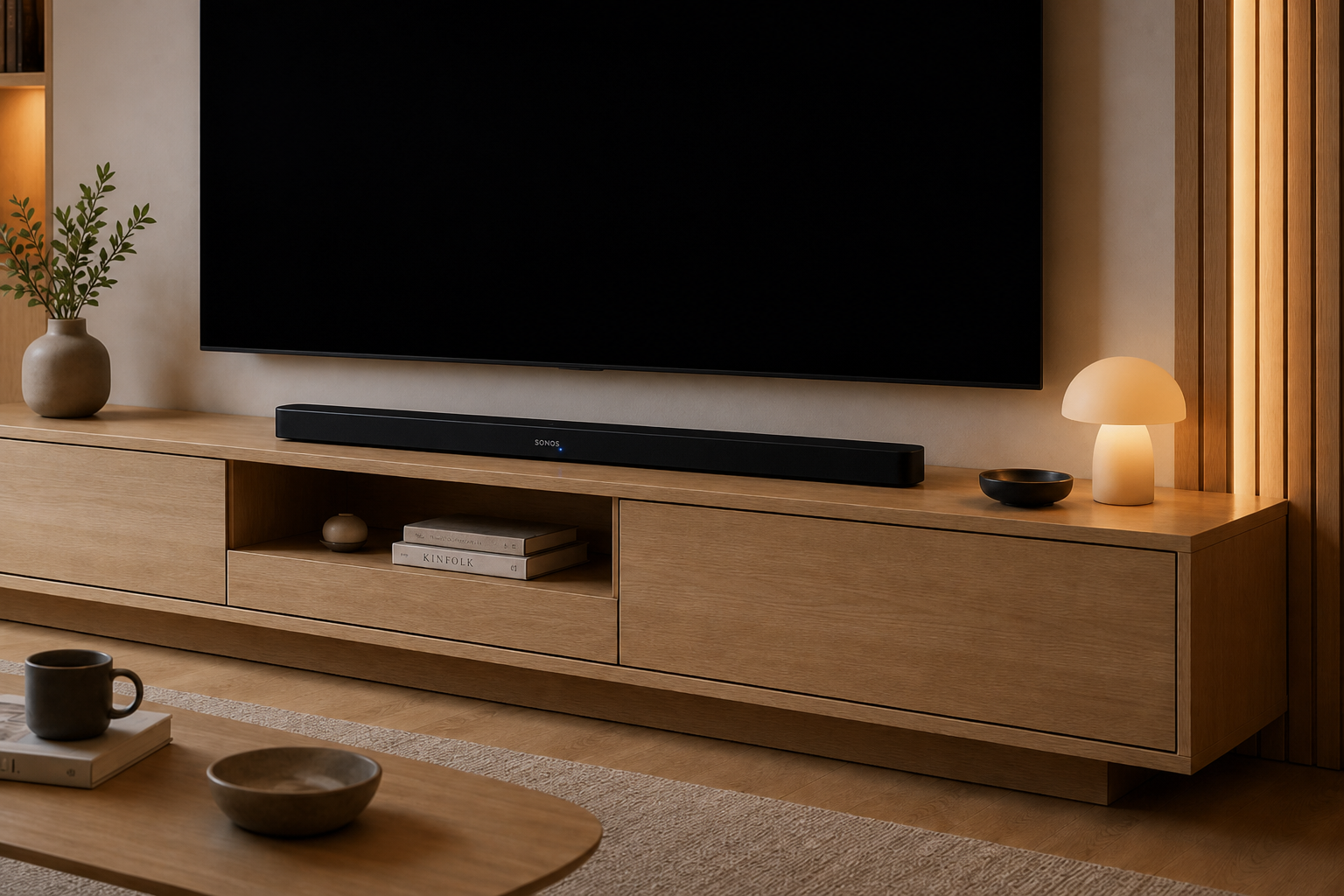
Mark had a soundbar. His neighbour didn't. That's the only difference.
"Same screen, same picture, same broadcast. Completely different experience."
Why Your TV's Speakers Are Physically Incapable
Modern televisions are extraordinary feats of display engineering. The panels are thinner than a finger. The image quality, in 2026, would have seemed like science fiction twenty years ago. But thinness — the very thing that makes a modern TV look beautiful on the wall — is the enemy of good audio.
Sound requires movement of air. To move air meaningfully, you need a speaker driver with physical excursion — the ability to push forward and pull back over a meaningful distance. The drivers crammed into the 8–15mm cavity behind most flat-screen panels have almost no excursion at all. They are, in acoustic terms, postage stamps trying to paint a mural.
| Problem | TV speakers | Soundbar |
|---|---|---|
| Driver size | 30–50mm — almost no excursion | 70–90mm+ minimum |
| Bass | Cut off below 150–200Hz | Extends to 30–40Hz with sub |
| Firing direction | Sideways or downward — 40% lost to furniture | Fires directly toward you |
| Stereo separation | 30–40cm — imaging near non-existent | 80–120cm — full stereo image |
The result is a frequency response that's essentially cut off below 150–200Hz, compressed in the mid-range where human voices sit, and thin in the highs. Sound mixers for major BBC and ITV productions spend months crafting soundscapes with professional monitoring equipment. None of that craft reaches you through built-in TV speakers.
7 Sounds Hidden in British TV Your TV Speakers Can't Reproduce
Sound designers and mixers for major British productions deliberately layer audio at frequencies and dynamics that presuppose a proper playback system. Here's what you've been missing.
1. The Whisper Layer in Bake Off
The technical producers on The Great British Bake Off use directional microphones positioned centimetres from contestants during judging. The whispered reactions, the barely audible "oh no" when a showstopper collapses — these are mixed into the programme at very low gain. On TV speakers, they're swamped by ambient music and crowd noise. On a soundbar with a centre channel, the dialogue separation makes them clearly audible. You're suddenly hearing the show the production team intended.
2. The Atmospheric Bed in Drama
Watch any episode of Happy Valley or Line of Duty and pay attention to the sound underneath the dialogue. Sound designers for these productions build complex "beds" — layers of environmental ambience, distant traffic, wind through buildings, the barely perceptible hum of a fluorescent light. On TV speakers, this all compresses into a vague, slightly noisy background. Through a soundbar, the texture of a scene's sound design becomes part of how you experience the drama.
3. Sub-Bass in Nature Documentaries
BBC Natural History Unit productions — Planet Earth, Blue Planet, Our Planet — are mixed with significant sub-bass content below 60Hz. The rumble of a distant stampede. The low-frequency "thump" of a whale dive. The near-infrasonic quality of wind across Arctic plains. None of this is reproduced by any TV speaker. Even a soundbar with a modest wireless subwoofer will reveal a physical dimension to these programmes that simply doesn't exist through a flat-screen.
4. Spatial Audio in Sports Broadcasts
Sky Sports and TNT Sports now broadcast a significant proportion of Premier League matches in Dolby Atmos. The crowd noise is encoded with spatial information — you can hear, when played back correctly, that the atmosphere has directionality, that noise comes from different parts of a stadium. Through TV speakers it's indistinguishable from mono crowd noise. Through an Atmos soundbar, you're placed inside a stadium.
5. Foley Detail in Comedy
British comedies, particularly those shot on location, use extensive foley work — the craft of adding and layering every physical sound in post-production. The creak of a specific floorboard in Fleabag. The exact sound of a mug being set down in This Country. These micro-sounds are part of the texture that makes premium British comedy feel so grounded and real. They sit in frequency ranges and at dynamic levels that TV speakers cannot render faithfully.
6. The Music Score
Composers scoring major British dramas — Peaky Blinders, Showtrial, The Crown — write for full orchestral or band recordings. The score is mixed alongside dialogue. On TV speakers, the music is either too loud (if the mixer prioritised it) or compressed into indistinct background (if dialogue was prioritised). A soundbar, particularly one with good frequency extension and channel separation, allows both to coexist at their intended levels.
7. Live Studio Audience Reactions
Panel shows, quiz programmes and live studio productions capture audience reactions with multiple overhead microphones designed to convey the genuine scale of a studio space. The applause, the laugh, the collective intake of breath — these have three-dimensional presence in the recording. TV speakers flatten this entirely. A soundbar restores it. Watching Would I Lie to You? with proper audio is a noticeably different, warmer experience.
How a Soundbar Actually Changes What You Hear
A soundbar addresses the failures of TV speakers on every front simultaneously:
- Larger drivers move more air, reproducing lower frequencies and louder transients accurately.
- A dedicated subwoofer (in 2.1 and above configurations) handles bass below 80–100Hz completely separately — extending down to 30–40Hz in better models.
- A centre channel (in 3.1 and above) handles dialogue in its own dedicated driver, making voices dramatically clearer and easier to follow at lower overall volume.
- Wider stereo spread — a soundbar is typically 80–120cm wide, compared to the 30–40cm of TV speaker separation. The stereo image opens up completely.
- Upward-firing drivers (in Dolby Atmos soundbars) bounce sound off the ceiling to create the impression of height channels — sound from above, as the mixer intended.
Even a £150 soundbar will reveal audio content that your TV speakers are completely masking. Start with a simple 2.1 bar — the improvement to dialogue clarity alone is worth it for most people.
Which Shows Benefit Most
In our experience, the programmes that reward better audio most dramatically are:
- BBC and ITV dramas — complex production audio, foley and score designed for home cinema playback
- Natural history documentaries — sub-bass content and spatial ambience are central to the experience
- Live sports — especially in Dolby Atmos from Sky and TNT
- Music programming — Later… with Jools Holland, Glastonbury broadcasts — designed to sound good
- Films on streaming — Netflix, Disney+ and Amazon Prime all stream Dolby Atmos where available; most smart TVs can pass this through via HDMI eARC
How to Get Started
You don't need to rethink your entire living room. A soundbar connects to your TV via a single HDMI or optical cable, sits below the screen on your TV unit, and is ready in under ten minutes. No separate amplifier, no speaker wire, no room treatment required.
If your TV has HDMI ARC or eARC — which virtually all televisions sold in the last five years do — you'll get full digital audio from every source your TV is connected to, including streaming apps, Blu-ray players and set-top boxes, through a single cable.
HDMI eARC connection · Wireless subwoofer for rooms larger than a bedroom · Centre channel driver for dialogue · Dolby Atmos decoding for films · Budget at least £150 — below this, the improvement is modest.
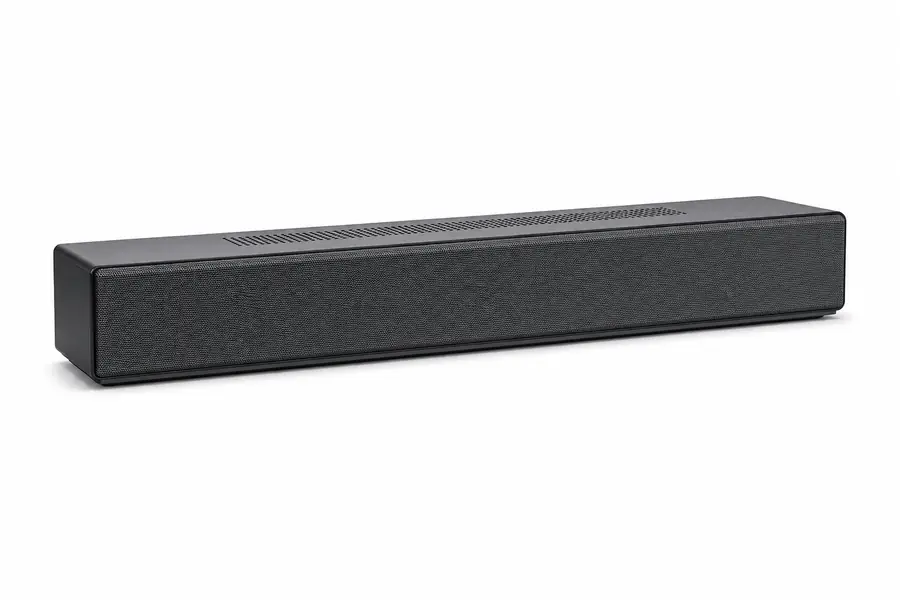
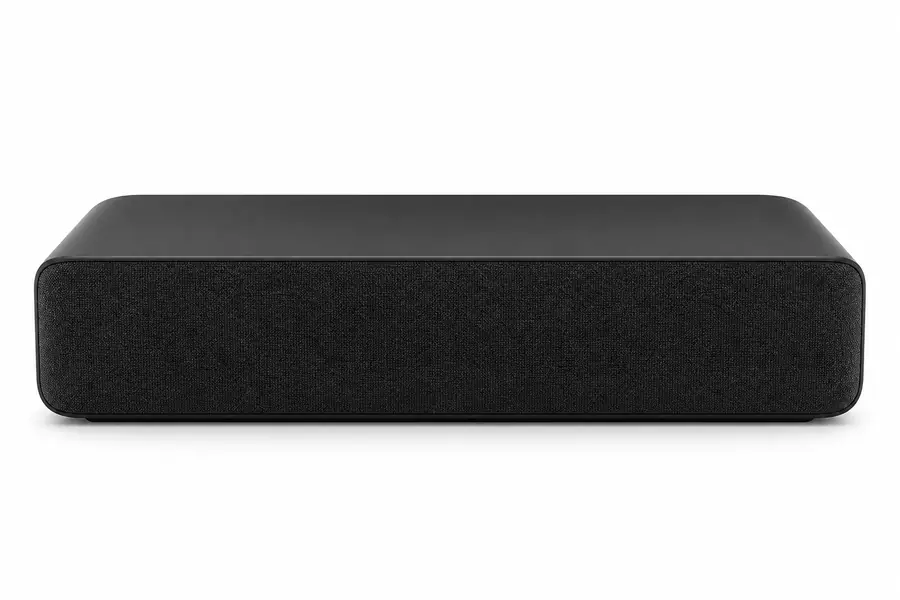
Browse our full range below — every model comes with free UK delivery over £99 and our 30-day no-quibble returns policy. If you're unsure which soundbar is right for your room and TV, our complete buyer's guide covers everything you need to know.

Disclosure: This is sponsored content produced by GolfersPlace AV. All products mentioned are sold by GolfersPlace AV. Prices correct at time of publication.
Free UK delivery over £99 · 2-year guarantee · 30-day returns